Safety and health
Baby rolls onto their tummy during sleep training: what to do
Always start your baby on their back. If they roll both ways on their own, they can stay on their tummy. If they roll only one way, turn them back.
You put your baby down on their back, said goodnight and closed the door. A few minutes later you look at the monitor and they are face down, bottom in the air, crying into the mattress. The plan says to wait. Everything you have read about safe sleep says babies sleep on their backs.
Here is the short answer. Always put your baby down on their back. If your baby rolls onto their tummy during sleep training and can roll both ways on their own, back to tummy and tummy to back, the American Academy of Pediatrics (AAP) says you do not need to keep turning them back. If they can roll only one way, go in and turn them onto their back, even in the middle of a wait.
Baby rolls onto their stomach during sleep training: the two cases
What you do depends on one thing: how well your baby rolls when nobody is helping.
- Your baby rolls both ways on their own. Start them on their back and let them settle in the position they choose. The AAP’s safe sleep guidance says that if babies are comfortable rolling both ways, you do not need to keep turning them to their back again. The NIH’s Safe to Sleep campaign says the same: once babies can roll from back to stomach and from stomach to back on their own, you can leave them in the position they choose after starting sleep on their back.
- Your baby rolls only one way. Safe to Sleep says that if a baby can roll only one way on their own, you can reposition them to their back if they roll onto their stomach during sleep. The Cleveland Clinic puts it more firmly: for a baby who can get onto their belly but cannot get back, back sleeping is still essential, and you should gently return them to their back.
Both sources agree on the first step. Every sleep starts on the back, naps included. The AAP’s recommendations apply to babies up to 1 year of age.
How to tell whether your baby rolls both ways
Watch during the day, on the floor, when your baby is awake and in a good mood. You are looking for two separate moves, each done without your hands: back to tummy, and tummy to back. One lucky flop does not count. The AAP’s word is “comfortable”. We read that as a baby who does it easily and often.
Babies get there at different times. Safe to Sleep notes that babies may start rolling over on their own as early as 2 months. The CDC lists rolling from tummy to back among the things most children (75% or more) can do by 6 months. A pediatrician quoted by the Cleveland Clinic says most infants can roll both ways by 6 months, and points out that some babies roll from back to belly before they can roll the other way. Those are the babies who end up stuck on their tummy at night.
If you are not sure which group your baby is in, treat them as a one-way roller for now, and ask your pediatrician at the next visit.
If your baby rolls only one way
Go in and turn them onto their back when you see them on their tummy. Do this whether or not the wait is over. Safe sleep comes before the timer.
You can do it in a way that still fits the Ferber method:
- Keep it quiet and short. Roll your baby onto their back, say the same few calm words you use at any check-in, and leave. The Sleep Foundation describes check-ins as brief, under one to two minutes, without picking up or feeding. The same applies here.
- Pick a simple rule for the clock. There is no official rule for this. One approach is to count the visit as that check-in and start the next wait when you leave.
- Expect to do it more than once. A baby who has just learned to roll tends to practice, including at 2 a.m.
This means you need a way to see your baby during the waits, such as a video monitor or a quiet look from the door. If you are unsure how closely to watch through the night, ask your pediatrician.
If you are going in every few minutes to turn your baby over, the waits stop meaning much, and it is fine to pause. Some families stop sleep training for a week or two, practice rolling in the daytime, and start again once their baby can get back on their own. Waiting a couple of weeks is completely fine. Our guide to what age to start the Ferber method covers the other readiness checks.
If your baby rolls both ways
Put your baby down on their back, then let them be. Many babies who can roll will choose their tummy or their side, and under the AAP guidance above they can stay there.
At a check-in, do what you always do: a few calm words, perhaps a hand on their back, and out. You do not need to turn them over. If you would like to, turn them once and leave. Try not to turn them again and again. As with a baby who keeps standing up, repeated repositioning can become the thing that keeps your baby awake. Our article on a baby who stands in the crib during Ferber describes the same loop, and what to do during a check-in covers the visit itself.
The waits do not change. Crying counts as crying, whichever way up your baby is. Rolling around, grumbling and babbling do not count, and there is no need to go in for those. The Ferber method chart has every night’s waits.
Make the crib safe for a baby who rolls
A baby who rolls can reach parts of the crib they could not reach before. Check these before tonight.
Three more checks:
- Stop swaddling. The AAP says to stop swaddling when your baby looks like they are trying to roll over, because the risk of suffocation is higher if a swaddled baby rolls to their stomach. If your baby still needs warmth, the AAP suggests layers of clothing or a wearable blanket. Choose one that leaves the arms free. Our article on sleep sacks and the Ferber method goes through the options.
- Nothing weighted. The AAP says not to use weighted blankets, sleepers, swaddles or other weighted objects on or near your baby. Safe to Sleep explains one reason: if a baby rolls over during sleep, the added weight could make it harder for them to roll onto their back again.
- Nothing that holds your baby in place. Wedges, positioners and rolled towels do not belong in the crib. The AAP advises avoiding baby products that are not consistent with its safe sleep recommendations, and says there is no evidence for products that claim to reduce the risk of SIDS.
When to pause, and when to call your pediatrician
Rolling often starts before a baby is old enough for sleep training. Sleep training is not recommended before about 4 months, and 6 months is the most common time to start. If your baby is under 6 months, talk to your pediatrician first. A young baby who has rolled and is crying needs you to go in, turn them over and comfort them.
Pause the plan and comfort your baby if they seem sick, have a fever, or are crying in a way that sounds different from ordinary protest. Call your pediatrician about any trouble breathing, noisy breathing or pauses in breathing during sleep. If your baby was born early or has a medical condition, follow your pediatrician’s advice on sleep position. The guide to teething, illness and when to pause covers stopping and restarting.
What to do today: practice, then pick your rule
Rolling back from tummy is a strength and coordination skill, and daytime is the place to build it. The AAP recommends supervised tummy time every day while your baby is awake, and says it helps with motor development. The Cleveland Clinic suggests plenty of awake tummy time to help babies build the strength they need to roll over.
Short sessions on a play mat, a few times a day, add up. Put a toy just out of reach on one side so your baby has a reason to turn. Let them work at it before you help.
While you are down there, watch how your baby rolls and decide which case you are in. Clear the crib down to a fitted sheet and put the swaddle away. Then tell anyone else who does bedtime what the rule is tonight: leave them, or turn them back.
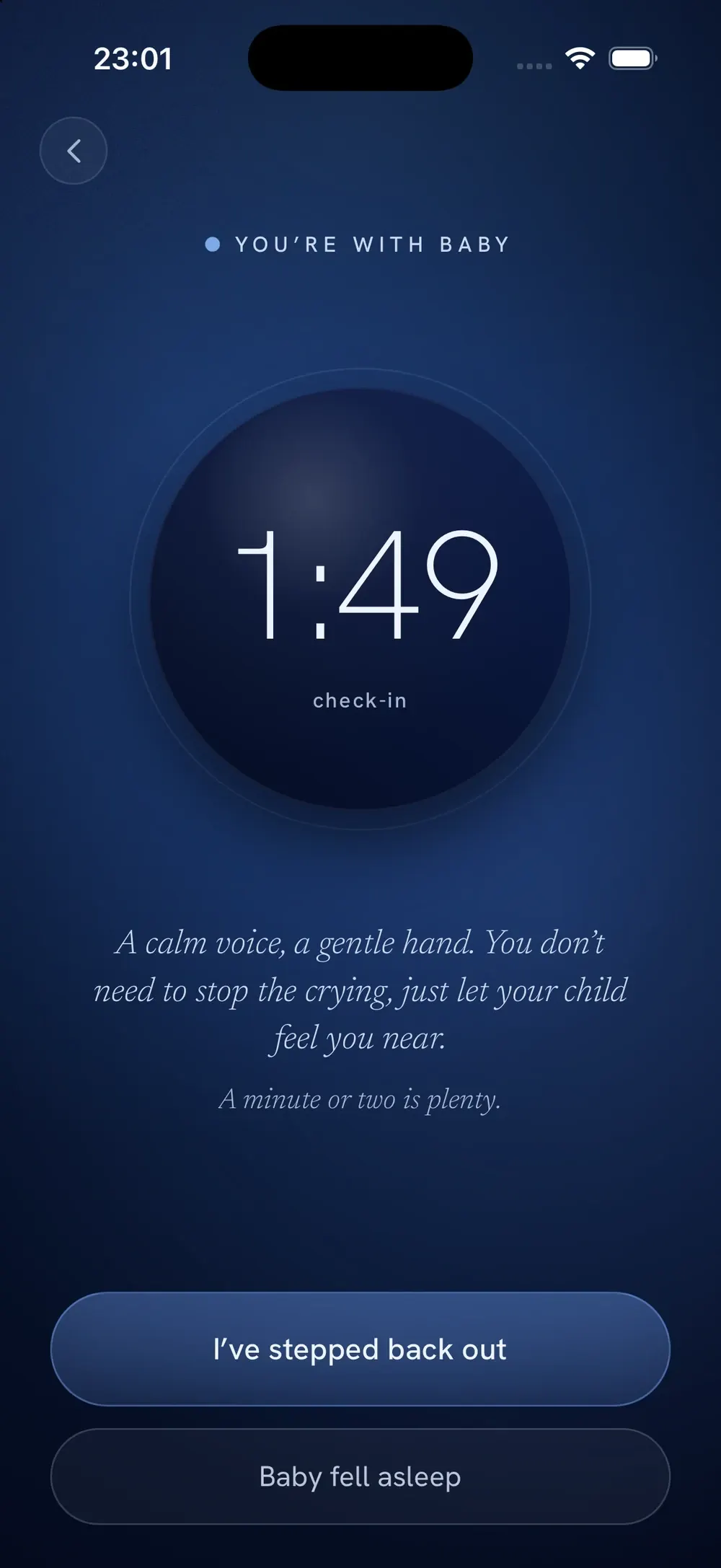
The Ferber app runs each wait, alerts you when it is time to check in and times the check-in (2 minutes by default). It keeps the time and does not watch your baby, so if your baby rolls only one way, keep an eye on them yourself and go in whenever you need to.
Common questions
Should I flip my baby back if they roll onto their stomach while sleeping?
It depends on how your baby rolls. The American Academy of Pediatrics says to always place your baby on their back to sleep, and that if they are comfortable rolling both ways, back to tummy and tummy to back, you do not need to keep turning them back. If your baby can roll only one way on their own, turn them onto their back when they roll onto their stomach.
When can babies roll both ways?
It varies. The NIH's Safe to Sleep campaign says babies may start rolling on their own as early as 2 months. The CDC lists rolling from tummy to back among the things most children (75% or more) can do by 6 months, and a Cleveland Clinic pediatrician says most infants can roll both ways by 6 months. Some babies roll from back to tummy before they can roll the other way.
What do I do about the Ferber wait if I have to go in and turn my baby over?
Go in and turn them. Safe sleep comes before the timer. There is no official rule for the clock after that. One simple approach is to keep the visit quiet and short, treat it as that check-in, and start the next wait when you leave the room.
Can I use a wedge or sleep positioner to keep my baby on their back?
No. The American Academy of Pediatrics says nothing should be in the crib except a fitted sheet, and advises avoiding baby products that are not consistent with its safe sleep recommendations. Soft objects in the crib are a risk for a baby who rolls, because the baby could roll into them and have their airflow blocked.
Sources
- American Academy of Pediatrics (HealthyChildren.org): How to Keep Your Sleeping Baby Safe: AAP Policy Explained
- NIH Safe to Sleep (NICHD): About Back Sleeping
- Cleveland Clinic: When Can I Put My Baby To Sleep on Their Stomach? (2024)
- NIH Safe to Sleep (NICHD): Frequently Asked Questions
- CDC, Learn the Signs. Act Early.: Milestones by 6 Months
- Sleep Foundation: The Ferber Method